
EL NIÑO AND THE RESILIENCE OF REGIONAL CORRIDORS
Protecting the Continuity of Trade Across East Africa and the Great Lakes
By the Great Lakes Corridors Forum (GLCF)
As climate patterns become increasingly important to economic planning, one question deserves greater attention across East Africa and the Great Lakes:
How resilient are our regional trade corridors when climate-related disruption occurs?
This question is particularly relevant as the World Meteorological Organization (WMO) reports that El Niño is firmly established and is expected to strengthen significantly, with impacts on rainfall and temperature patterns and associated risks of floods, drought and extreme heat. WMO forecasts indicate that the current El Niño episode is likely to persist into early 2027.
For East Africa and the Great Lakes region, this is not simply a climate issue.
It is a trade, infrastructure, logistics, investment and regional integration issue.
When Climate Risk Becomes Corridor Risk
Modern regional economies depend on the continuous movement of people, goods, energy, information and capital.
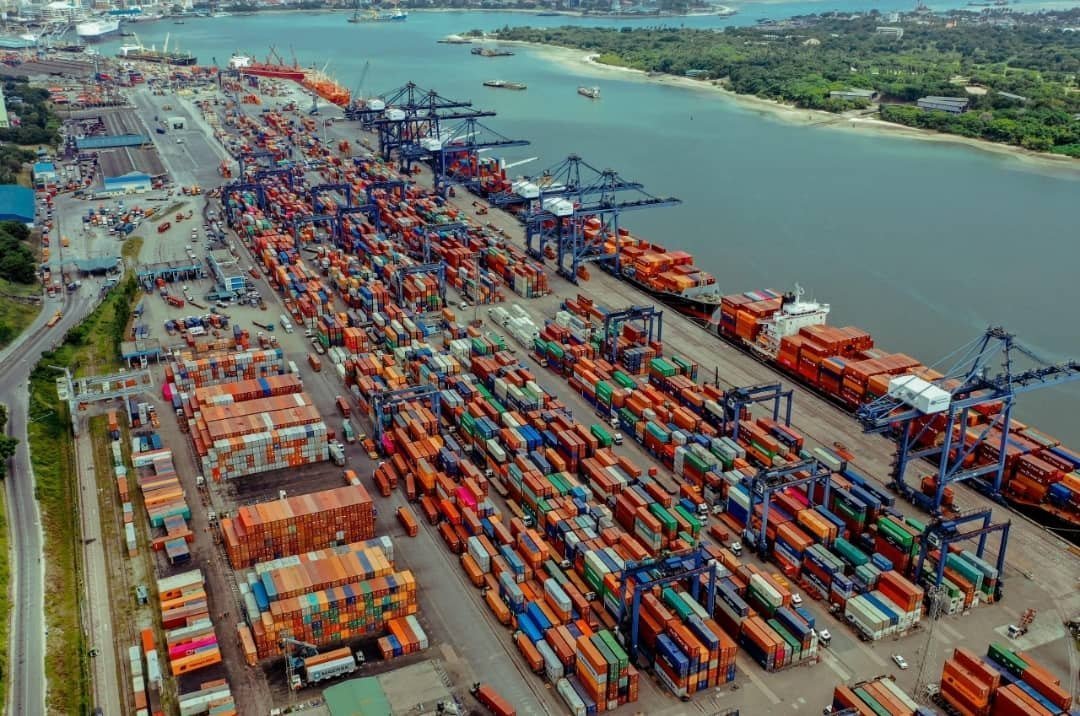
Ports connect international markets to inland economies. Roads and railways connect production centres to markets. Border crossings connect national economies. Inland waterways connect communities and commercial centres across the Great Lakes.
Together, these systems form the corridors through which regional value chains operate.
When one part of this system is disrupted, the consequences can extend far beyond the location of the initial event.
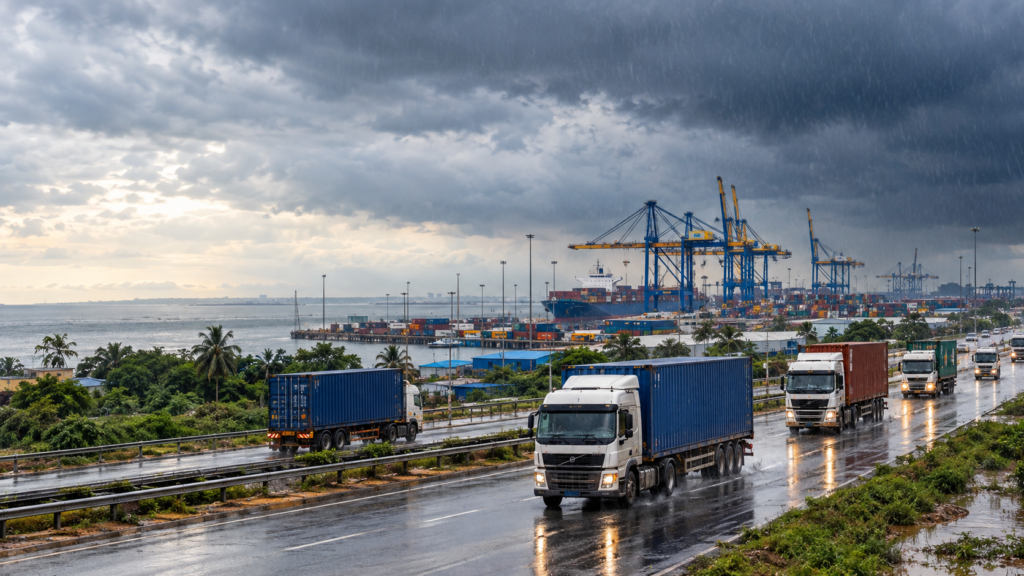
Heavy rainfall can affect roads, bridges, border infrastructure and access routes. Flooding can interrupt transport operations and damage critical infrastructure. Extreme weather can affect agricultural production, energy systems and water resources. These disruptions can translate into longer delivery times, higher logistics costs, supply shortages and increased uncertainty for businesses.
The WMO has specifically highlighted the potential for excessive rainfall in parts of the Greater Horn of Africa during October–December 2026, including areas of Tanzania, Uganda, Rwanda and Burundi, while warning that excessive rainfall can increase flood risks and damage critical infrastructure.
This makes resilience an economic priority.
The Corridor Is More Than a Road
A trade corridor should not be viewed simply as a highway connecting two points.
A functioning corridor is an interconnected ecosystem involving:
- ports and maritime gateways;
- roads and bridges;
- railways and inland transport;
- border posts and customs systems;
- logistics companies and freight operators;
- warehouses and distribution centres;
- financial institutions and insurers;
- digital systems and information flows;
- energy and fuel supply;
- public authorities and regulatory institutions.
The resilience of the corridor therefore depends on the resilience of the wider system.
A road may remain open while a border crossing becomes congested. A port may remain operational while inland transport is disrupted. A railway may function while access roads to terminals become impassable.
This is why climate resilience must be approached at corridor level, rather than infrastructure by infrastructure.
East Africa and the Great Lakes: A Connected Economic Space
The economies of East Africa and the Great Lakes are increasingly connected through regional transport and trade networks.
The Central Corridor, for example, links Tanzania and the port of Dar es Salaam with landlocked and inland markets in the wider region. The World Bank has described investments along the Dar es Salaam Corridor as part of a broader effort to improve transport and trade connectivity while strengthening climate resilience.
This regional connectivity creates enormous economic opportunities.
But it also means that disruptions can travel across borders.
A disruption affecting one section of a corridor can create consequences for exporters, importers, transporters, manufacturers, farmers, mining companies, consumers and investors elsewhere along the network.
The strategic question is therefore not only:
How do we repair infrastructure after disruption?
It is also:
How do we design, finance, operate and coordinate corridors so that they can continue functioning under pressure?
From Climate Response to Corridor Resilience
Building resilient corridors requires a shift from reactive responses to proactive planning.
This means bringing climate information into infrastructure planning, transport management, investment decisions and regional trade strategies.
It also means asking practical questions:
Do we know which sections of our corridors are most vulnerable?
Do transport operators have reliable early-warning information?
Are alternative routes and transport modes available when disruption occurs?
Are ports, border posts and logistics facilities prepared for extreme weather?
Can governments and private operators coordinate rapidly when a disruption affects several countries?
Are financial institutions and insurers incorporating climate-related corridor risks into their decisions?
Can regional infrastructure investments be designed to serve both economic efficiency and resilience objectives?
These questions require collaboration between sectors.
No single ministry, company or institution can build corridor resilience alone.
Resilience Requires Capital
Resilient infrastructure requires investment.
Roads, bridges, railways, ports, border facilities, warehouses, digital systems and energy networks all require long-term capital.
But resilience is not simply about spending more.
It is about ensuring that infrastructure investment takes into account the risks that could affect its performance over its entire lifecycle.
The World Bank’s work on regional connectivity increasingly emphasizes the importance of transport corridors as instruments for reducing trade costs, connecting landlocked economies to markets and strengthening regional integration.
The next step is to ensure that these corridors are also prepared for an environment in which climate-related disruption must be treated as a serious component of economic risk.
This creates opportunities for governments, development finance institutions, commercial banks, insurers, infrastructure investors, logistics companies and technology providers.
Resilience itself can become an investment agenda.
From National Infrastructure to Regional Value Chains
A resilient corridor is not an end in itself.
Its ultimate purpose is to support economic activity.
When corridors function effectively, they allow agricultural products to reach markets, minerals and raw materials to move toward processing centres, manufactured goods to reach consumers, businesses to access regional markets and investors to connect production with demand.
This is the foundation of regional value chains.
For East Africa and the Great Lakes, the opportunity is therefore larger than simply moving cargo faster.
The objective is to build a regional economic system in which corridors, capital and markets reinforce one another.
That requires stronger coordination between national development priorities and regional economic objectives.
It requires governments to work with the private sector.
It requires infrastructure operators to engage with financiers.
It requires climate and disaster-risk experts to engage with transport and trade institutions.
And it requires investors to understand the strategic importance of resilient connectivity.
A Conversation That Cannot Remain Sectoral
The El Niño challenge illustrates why regional economic discussions can no longer remain confined within individual sectors.
A climate scientist may see rainfall patterns.
A transport operator may see road disruption.
A port authority may see changes in cargo flows.
A banker may see increased project risk.
An insurer may see a changing risk profile.
A government may see a threat to trade and economic growth.
A manufacturer may see a potential interruption to production.
All of these perspectives are connected.
The real challenge is to bring them together around a common regional agenda.
The Great Lakes Corridors Forum: A Platform for the Conversation
This is precisely where the Great Lakes Corridors Forum (GLCF) seeks to contribute.
The GLCF brings together stakeholders across government, business, infrastructure, logistics, finance, investment and regional integration to examine how corridors can become stronger engines of regional economic development.
The Forum is built around a simple principle:
Regional economic transformation requires more than national visions. It requires connected corridors, capital and markets.
In December 2026, this conversation will take a specific focus through the session:
RESILIENT CORRIDORS: CLIMATE, INFRASTRUCTURE & THE CONTINUITY OF REGIONAL TRADE
The discussion will examine the relationship between climate risks, infrastructure resilience and the continuity of regional trade, with a particular case study:
El Niño & the Resilience of East African and Great Lakes Corridors
The objective is not simply to discuss the phenomenon.
It is to bring decision-makers and market actors together to examine what resilience should look like in practice.
This includes infrastructure preparedness, early-warning systems, logistics continuity, financing, insurance, alternative routes, regional coordination, technology and investment.
From Dialogue to Action
The GLCF is designed around the belief that regional forums should create pathways toward practical cooperation.
That means moving beyond discussion toward:
- strategic partnerships;
- investment opportunities;
- business-to-business engagement;
- business-to-government dialogue;
- infrastructure and logistics cooperation;
- institutional partnerships;
- regional value-chain development;
- and actionable commitments.
The challenge of resilient corridors therefore presents an opportunity to connect climate preparedness with economic development.
Instead of seeing resilience only as a cost, the region can also consider it as an opportunity to modernize infrastructure, strengthen logistics systems, improve regional connectivity and attract long-term investment.
The December 2026 Moment
The discussion comes at an important moment for the region.
The Greater Horn of Africa’s October–December rainfall season is economically significant, and current climate outlooks point to heightened risks associated with above-normal rainfall in several parts of the region.
At the same time, East Africa is investing in transport corridors, regional connectivity and trade infrastructure.
The intersection of these two realities creates a strategic opportunity:
to build resilience into the next generation of regional infrastructure and trade systems.
The question is no longer simply how much cargo a corridor can carry under normal conditions.
The question is:
«How much resilience can the corridor provide when conditions are no longer normal?»
A Regional Conversation for Regional Solutions
The Great Lakes region does not operate as a collection of isolated economies.
Its markets, transport systems, ports, borders, production centres and investment flows are increasingly interconnected.
The resilience of one part of this system can therefore contribute to the resilience of the wider region.
El Niño provides an immediate and concrete context for examining this challenge.
But the conversation is bigger than one climate event.
It is about designing a regional economic system capable of continuing to create value under changing conditions.
It is about infrastructure that connects.
It is about capital that supports resilience.
It is about markets that remain accessible.
And ultimately, it is about ensuring that regional integration continues even when disruption occurs.
FROM NATIONAL VISIONS TO REGIONAL VALUE CHAINS
Under this broader theme, the Great Lakes Corridors Forum 2026 will bring together policymakers, investors, infrastructure leaders, logistics operators, financial institutions, development partners and private-sector stakeholders to explore how the region can strengthen its corridors and unlock greater regional economic value.
4–5 December 2026
Dar es Salaam, Tanzania
RESILIENT CORRIDORS
Climate. Infrastructure. Trade Continuity. Regional Resilience.
The conversation starts with El Niño.
The objective is a more resilient regional economy.