

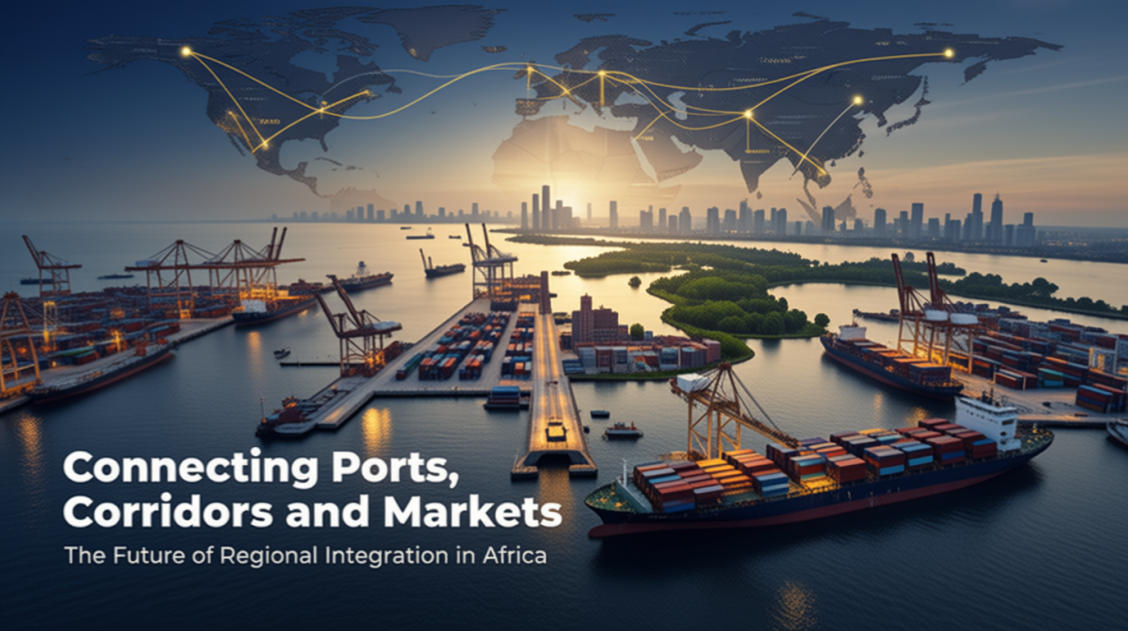
Why Connectivity Matters
Across Africa, infrastructure remains one of the most important drivers of economic growth. Efficient ports, reliable transport corridors and modern logistics systems are essential for facilitating trade and attracting investment.
For land-linked countries within the Great Lakes Region, access to regional and international markets depends on the effectiveness of these transport networks.
The Port-Corridor Connection
Ports are gateways to global trade. However, their impact depends on how efficiently goods move beyond the port.
Integrated corridors connecting seaports to inland markets can:
- Reduce transit times
- Lower logistics costs
- Improve supply chain resilience
- Increase export competitiveness
- Support industrial development
Digital Transformation and Smart Logistics
Technology is increasingly shaping the future of logistics.
Digital customs systems, smart ports, cargo tracking solutions and integrated trade platforms are helping countries improve efficiency and reduce bottlenecks.
The next generation of African trade corridors will be both physical and digital.
A Shared Regional Vision
Regional integration requires cooperation among governments, private sector stakeholders and development partners.
Through dialogue, investment and policy coordination, the Great Lakes Region can create a connected economic ecosystem capable of competing globally.
GLCS: A Platform for Action
The Great Lakes Corridors Summit provides a unique environment where stakeholders can identify solutions, build partnerships and advance projects that will strengthen regional connectivity for decades to come.
The future of African trade will be built on connected ports, efficient corridors and integrated markets.